
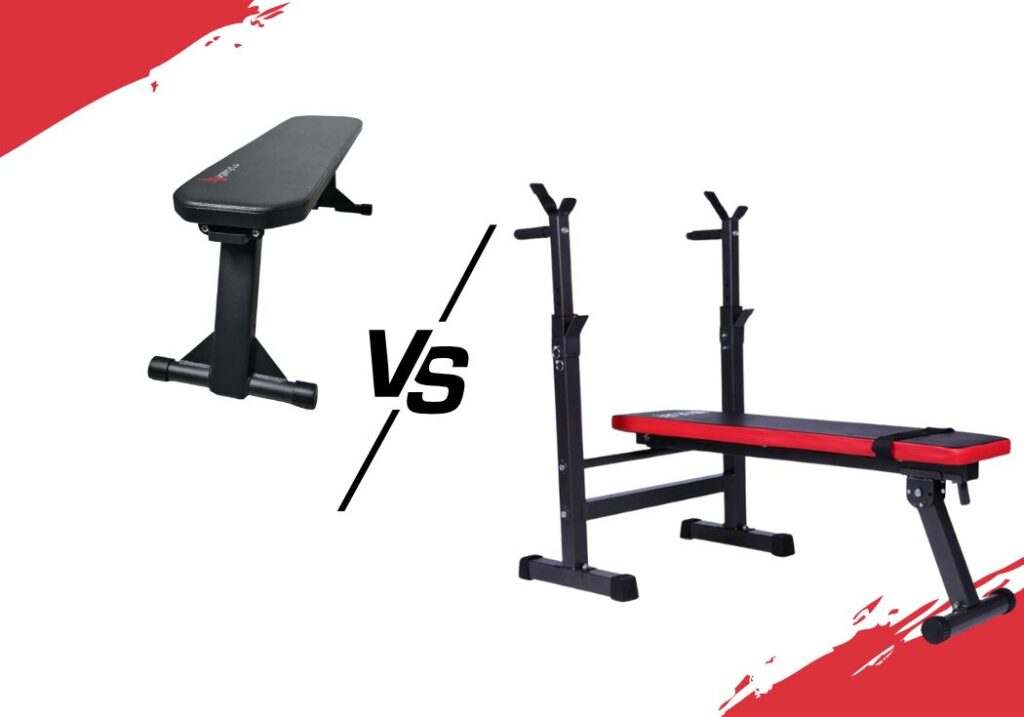
When searching for a weight bench, workout bench, or bench press bench online, you’ll come across a variety of designs and models. For most people setting up a home gym, saving space is essential—your equipment needs to be compact and easy to store. One of the biggest decisions is whether to choose a standalone weight bench or a bench press bench with a built-in rack for a barbell. This article will walk you through the pros and cons of each type, helping you make the best decision for your home gym setup.
Key takeaways
- A standalone weight bench is about 120–130 cm long and 40 cm wide; a bench press bench with a rack is usually about 120 cm wide and stays 50 cm or more wide even when folded.
- A standalone bench covers far more exercises: dumbbell or barbell bench press, single-arm rows, Bulgarian split squats, step-ups, triceps dips and bodyweight work.
- A bench with a rack (uprights) is built mainly for the barbell bench press; the rack occupies part of the bench and limits other exercises.
- Standalone benches are light and easy to move or store; rack benches are heavy, bulky and best left in a fixed spot.
- For a small home, a standalone bench is usually the better choice – you can still bench press with dumbbells, or with a barbell if you add separate racks.
What types of weight benches are there?
For a home gym, the choice usually comes down to two types of weight benches. The first is the standalone weight bench: a free-standing flat bench, either fixed or foldable, that you can use with dumbbells, a barbell on separate racks, or just your bodyweight – for presses, rows and leg work such as Bulgarian split squats on a weight bench. The second is the bench press bench with a rack: a bench with built-in uprights that hold a barbell, often with an option to convert to an incline bench. Below we compare the weight bench vs bench press rack on exercises, storage, workout space and mobility.
Comparison: Standalone Weight Bench vs. Bench Press Bench with Rack
1. Standalone Weight Bench
Exercises You Can Do
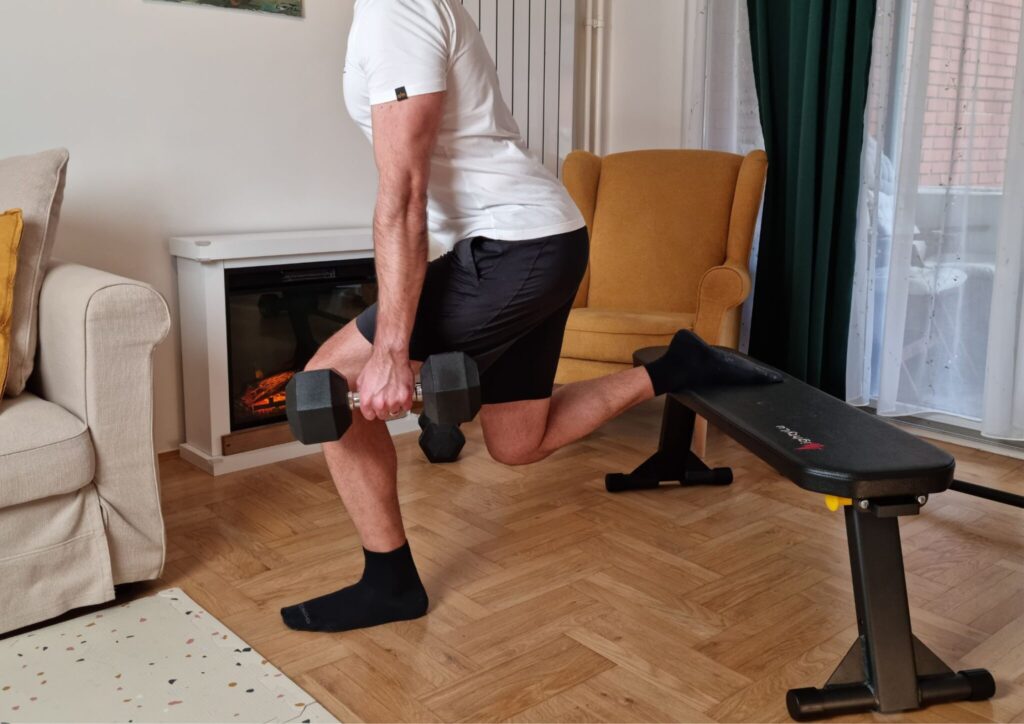
The standalone weight bench is one of the most sought-after pieces of equipment for home gyms because it allows you to perform a wide range of strength and conditioning exercises. It’s perfect for the classic bench press exercise, whether you’re using a barbell (if you have separate racks) or dumbbells. In addition to the bench press, you can use it for single-arm rows, Bulgarian split squats, step-ups, triceps dips, and various aerobic or bodyweight exercises. This versatility makes the standalone weight bench a key component for any well-rounded workout routine. If you train with dumbbells, our guide to the dumbbell bench press at home shows how to press safely without a rack or a spotter.
Storage
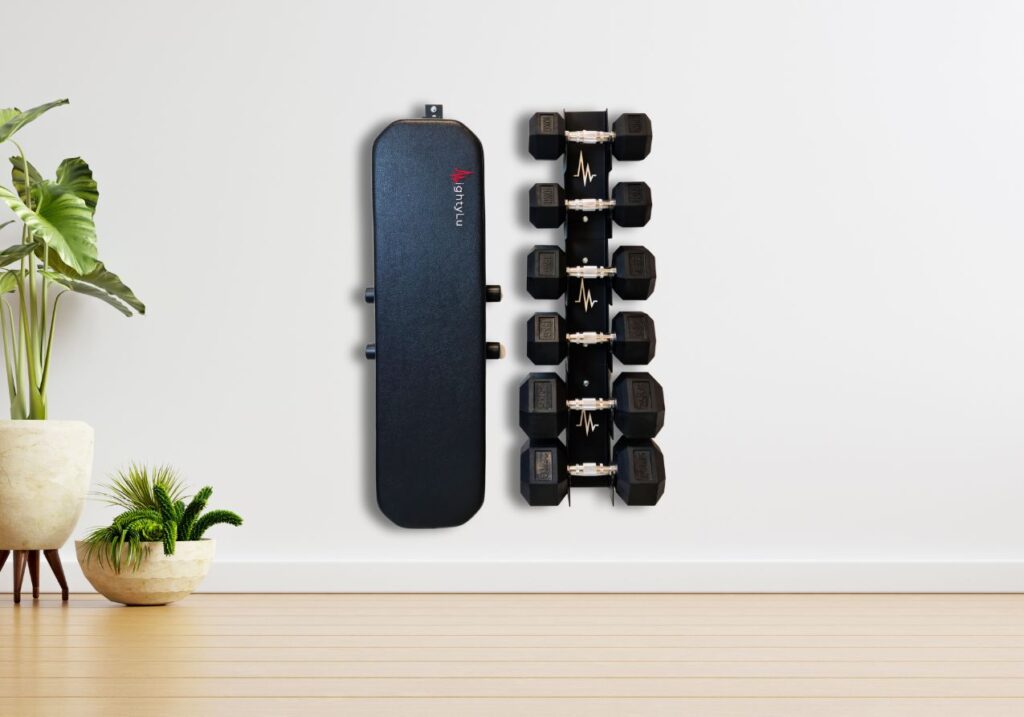
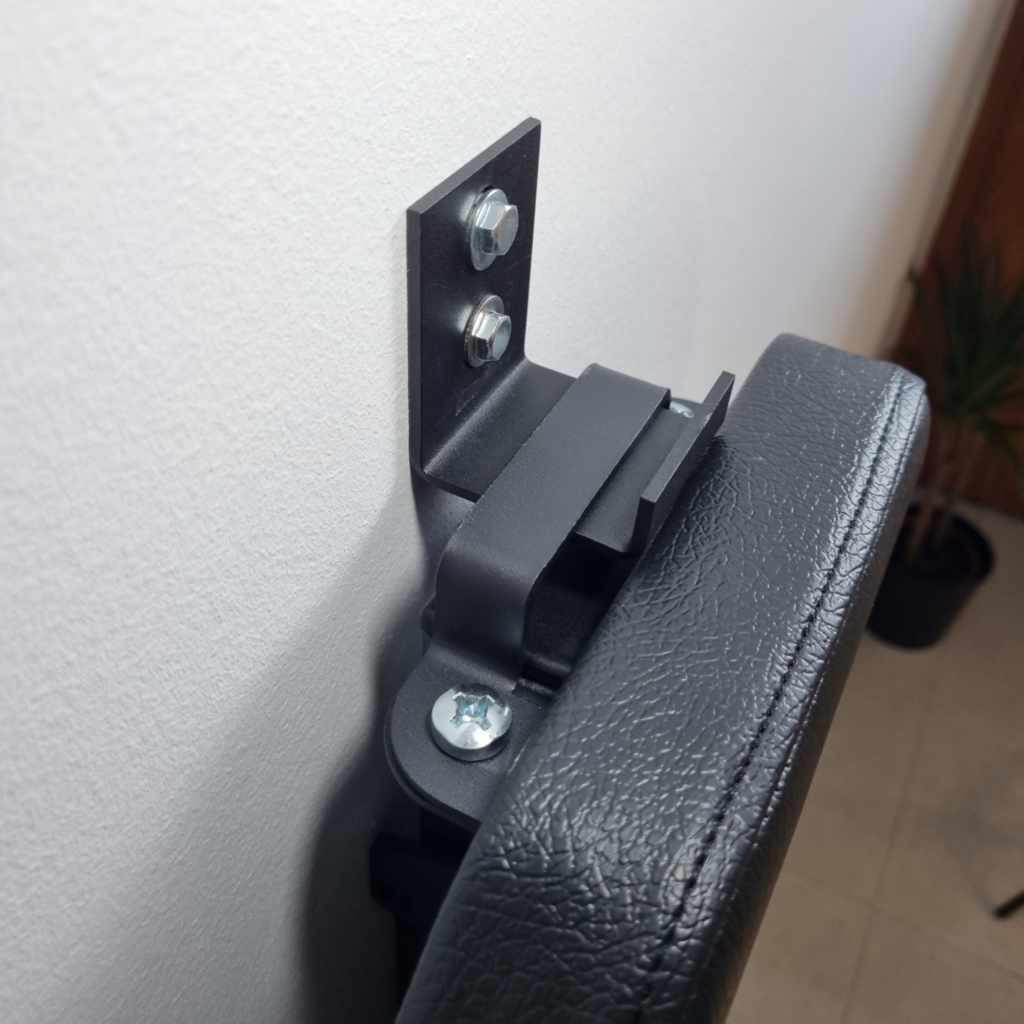
Standalone weight benches are generally around 120-130 cm in length and about 40 cm in width, including the legs. Thanks to their compact size, they’re easy to store in a corner of your living room, garage, or workout room. Some models, like the MightyRock foldable weight bench, even come with a wall-mount feature, so you can hang them up when not in use. In fact, our bench folds down to only 9.5 cm — making it a very compact foldable weight bench for small apartments.
Space Needed for Workouts
Because of their compact footprint, standalone weight benches don’t require much workout space. You can easily find room in a small apartment, making it an ideal choice if space is limited.
Mobility
Another major advantage is that standalone weight benches are very portable. They’re lightweight and easy to move, so you can shift them around the room or take them outside on nice days. This mobility is a huge plus if you like to change up your workout environment.
2. Bench Press Bench with Rack
Exercises You Can Do
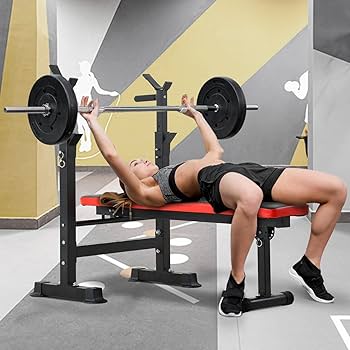
A bench press bench with a rack is typically a fixed unit designed mainly for the bench press exercise using a barbell. While you can technically perform some other exercises on it, the built-in rack creates a limitation. Because the rack holds the barbell in place, it occupies a significant part of the bench’s surface, making it less practical for exercises like single-arm rows or step-ups.
Storage
These benches often come with a foldable design to save some floor space. However, even when folded, they remain quite bulky—around 50 cm or more in width—which can make storage challenging, especially if you don’t have a dedicated workout room.
Space Needed for Workouts
Bench press benches with racks are usually about 120 cm wide, requiring a larger workout area. If you’re working out in a room that doubles as an office or bedroom, you’ll need to plan carefully to ensure you have enough space.
Mobility
Unlike standalone benches, these benches are not very mobile. They’re large, heavy, and often don’t fit through doorways easily. Rotating or moving them can be a hassle, so they’re best placed in a fixed spot in your home gym.
Weight Bench vs Bench Press Rack: Advantages and Disadvantages
If you want a structured overview of what actually makes a good foldable bench — beyond just “standalone vs rack” — our foldable weight bench buying guide explains what is important to know before buying one.
Standalone Weight Bench
Advantages:
Supports a wide range of exercises beyond just the bench press
Lightweight and easy to move
Requires minimal storage space
Needs very little workout space
Disadvantages:
If you want to do a barbell bench press, you’ll need separate racks or stands for the barbell
Bench Press Bench with Rack
Advantages:
Perfect for barbell bench pressing without needing separate racks
Often includes an option to convert to an incline bench
Disadvantages:
Bulky and difficult to move
Part of the bench is occupied by the rack, limiting versatility
Takes up more workout space
Which bench should you choose for your home gym?
Conclusion
One of the key differences between these two types of weight benches is their size. The bench press bench with a rack takes up significantly more space, while the standalone weight bench is compact and easy to store. Another important factor is versatility. The standalone weight bench allows for a wide variety of exercises, from upper body strength to conditioning workouts, whereas the bench press bench with a rack is designed primarily for the bench press.
It’s also worth mentioning that many foldable bench press benches come with a very narrow padding—about 25 cm wide. While that might save space, it’s not ideal for shoulder and scapula health during pressing movements, as a narrow pad doesn’t offer the necessary support for your shoulder blades.
In the end, if you’re solely focused on barbell bench pressing and have enough space, the bench press bench with a rack might be a good investment for you. However, keep in mind that you can still perform the bench press using a standalone weight bench if you have separate barbell racks. Ultimately, whichever option you choose, be sure to invest in a high-quality weight bench that meets your needs!
Frequently Asked Questions
The two main types are the standalone weight bench, a free-standing flat bench that can be fixed or foldable, and the bench press bench with a rack, which has built-in uprights that hold a barbell. Rack benches often include an option to convert to an incline bench.
A standalone weight bench supports a wide range of exercises, is light and needs little space. A bench press bench with a rack is designed mainly for the barbell bench press; the rack occupies part of the bench, and the unit is bulky and hard to move.
A standalone bench is usually better for a small apartment. It is around 120–130 cm long and 40 cm wide, while a bench press bench with a rack is about 120 cm wide and stays 50 cm or more wide even when folded.
Yes. You can do the bench press with dumbbells on any standalone bench, and with a barbell if you add separate racks or stands for the bar.
Many foldable bench press benches have a narrow pad of about 25 cm. That saves space, but it does not offer the support your shoulder blades need during pressing movements.
For most homes the standalone bench wins on space: without uprights and bar holders you can use it for dumbbell bench presses, single-arm rows, Bulgarian split squats, step-ups and triceps dips, and the whole training area – bench, dumbbells and a dumbbell-to-barbell converter for barbell-style presses – fits in less than 4 m². Nothing has to stay set up when you are done.
If you choose the standalone route, the MightyRock foldable weight bench gives you a 110 × 29 cm pad for proper shoulder-blade support, a 500 kg rating (user + weights) and a patented 2 mm steel frame that folds to 9.5 cm, so it can hang on the wall or slide under the sofa between workouts.