

If you love playing basketball with your friends, you’ve probably dreamed of dunking or at least jumping a few centimeters higher to block a shot and impress your teammates. Similarly, if you play soccer, having more explosiveness during a jump can help you win aerial duels. Many sports require jumping ability and explosiveness to be more effective in the game. However, few people actually train to improve their vertical jump, assuming it’s purely a natural ability. While genetics play a role, studies have shown that regular vertical jump training can significantly improve your jumping height. In this guide, we’ll share exercises you can do at home with minimal equipment to help you add those extra centimeters to your jump.
Key takeaways
- Genetics play a role, but regular training can significantly improve how high you jump – and you can do it at home with minimal equipment.
- Train three areas: strength (squats, Bulgarian split squats, deadlifts, bench step-ups, overhead press, core), plyometrics and flexibility/mobility.
- Plyometrics you can do at home: depth jumps, bench jumps, single-leg bench jumps and standing broad jumps – always aim for soft landings.
- Use your arms: an arm swing adds propulsion, so a jump with arm swing is clearly higher than one with your hands on your hips.
- Reduce excess body fat but keep or build muscle, because muscle provides the power you need to jump.
Biomechanics of the Vertical Jump
A vertical jump is a complex movement that requires coordination of nearly all muscle groups. To achieve maximum jump height, each phase must be executed with precise timing. When jumping, you’re working against gravity, meaning you must generate a force greater than your body weight to propel yourself into the air.
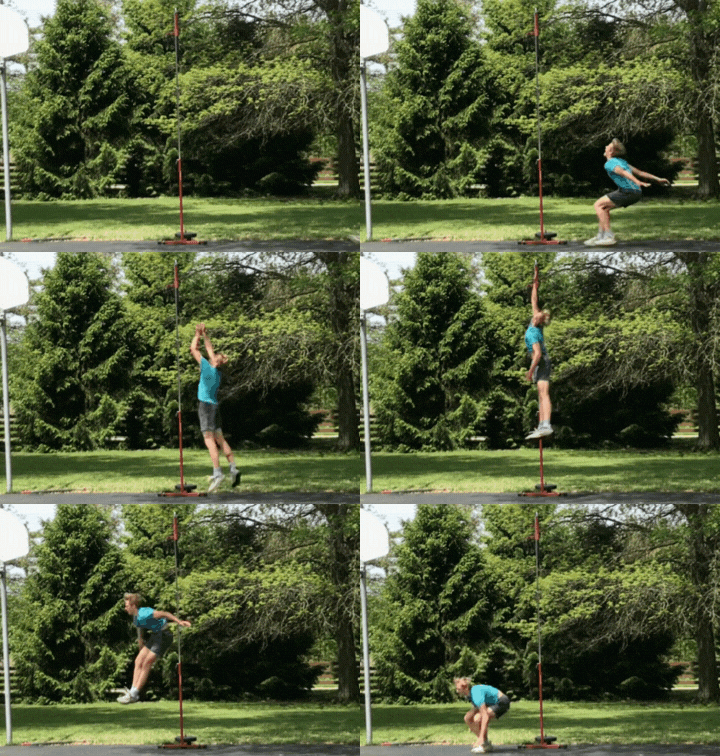
There are several key factors that contribute to an effective vertical jump:
Muscle strength – Stronger muscles produce greater force, allowing a higher jump.
Arm swing momentum – Using your arms can add extra propulsion.
Elastic energy stored in tendons – Proper plyometric training enhances this.
Conversion of horizontal speed into vertical force – Running before jumping maximizes jump efficiency.
Try jumping from a standstill while keeping your hands on your hips, then compare it to a jump where you use your arms for momentum—you’ll notice a significant difference (link od study).
Types of Vertical Jumps in Sports
In sports like basketball, volleyball, and soccer, you primarily use two types of vertical jumps:
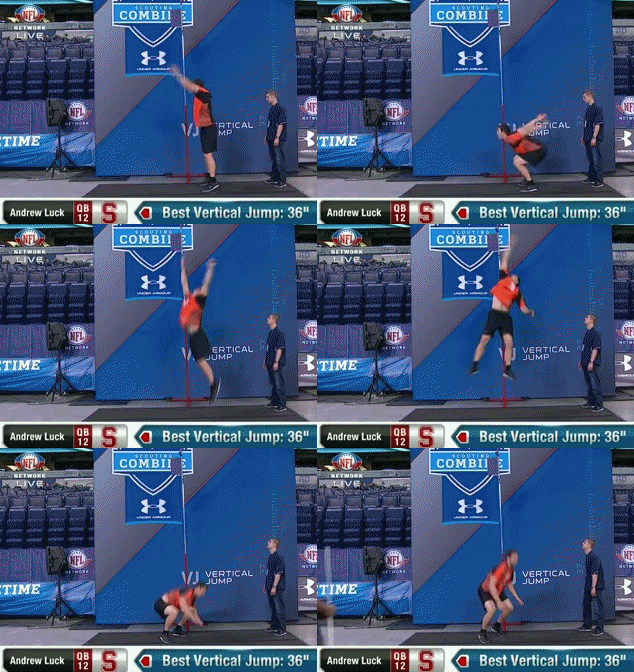
Standing Vertical Jump – Jumping straight up from a standing position, often used in basketball and volleyball when attempting a block.
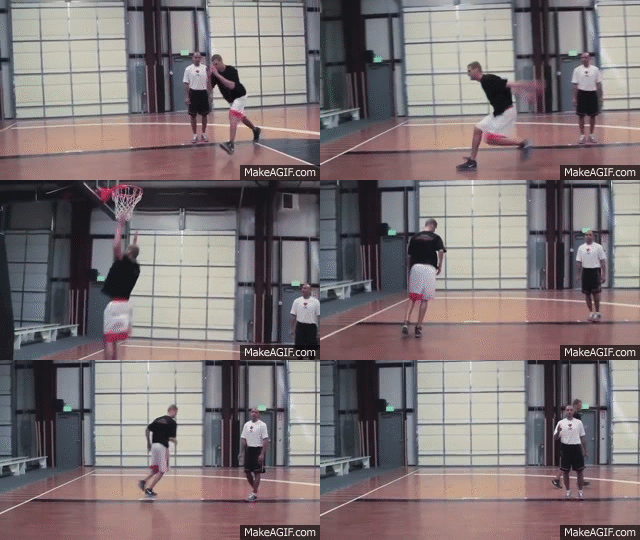
2. Approach Jump – Generating momentum with a running start, often using a one-foot takeoff before bringing the second foot into the jump. This method produces a higher jump by utilizing full-body biomechanics.
How Can You Improve Your Vertical Jump at Home?
Key Components of Vertical Jump Training
To improve your vertical jump, you should train across multiple areas:
Strength Training
Plyometric Exercises
Flexibility and Mobility Work
Another crucial factor is body weight. Since jumping requires overcoming gravity, reducing unnecessary body fat can improve performance. However, losing muscle mass is counterproductive, as muscle provides the power needed for jumping. The goal should be to reduce excess fat while maintaining or increasing muscle strength.
Strength Exercises for Vertical Jump Improvement
Building lower body and core strength is essential for a higher vertical leap. Strong legs generate more power, while a strong core stabilizes your body and improves overall efficiency. Here are the best strength exercises to improve your jump:
Squats – One of the best exercises for building lower body strength. Deep squats, jump squats, and front squats are all beneficial for improving vertical power.
Bulgarian Split Squats – These help develop unilateral strength, balance, and stability, which are crucial for jumping off one leg. See our guide to Bulgarian split squats on a weight bench at home for the correct setup.
Deadlifts – Strengthen the posterior chain (hamstrings, glutes, and lower back), providing the explosiveness needed for jumping.
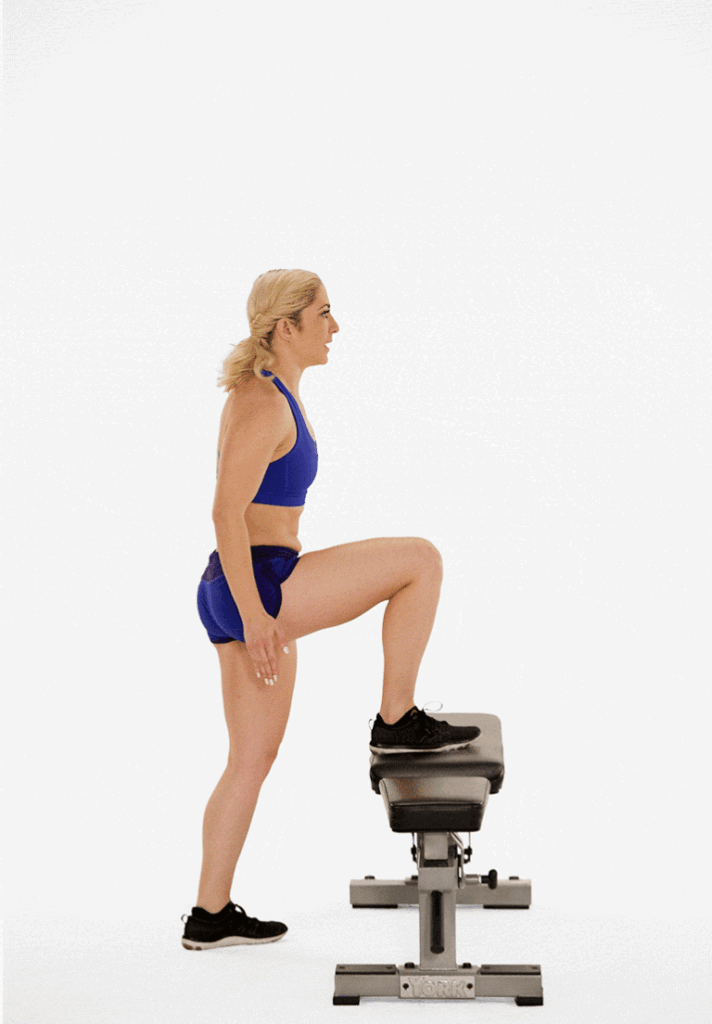
Step-Ups on a Bench – Mimic the motion of jumping while improving balance and single-leg strength.
Overhead Shoulder Press – Strong shoulders contribute to an effective arm swing, which plays a significant role in vertical jumping.
Core Strengthening Exercises – A strong core enhances overall body control and stability during a jump. Exercises such as planks, hanging leg raises, and Russian twists should be included in your routine.
For a complete lower-body session with minimal equipment, read our guide to building strong leg muscles at home.
Plyometric Exercises
Plyometric training enhances your body’s ability to produce explosive power by improving the efficiency of the stretch-shortening cycle in your muscles. These exercises train your fast-twitch muscle fibers, which are responsible for rapid force generation. Key plyometric exercises include:
Depth Jumps – Step off a box or bench and immediately jump as high as possible upon landing. This improves reactive strength and explosiveness.
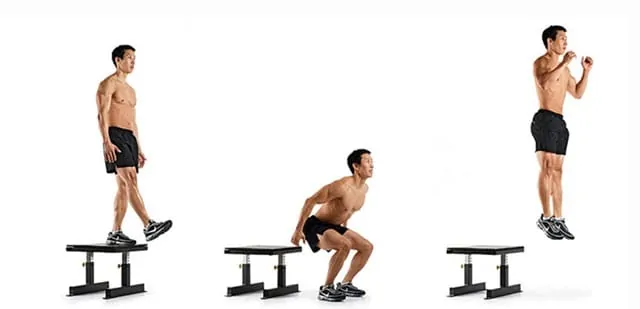
Bench Jumps – Jump onto a sturdy bench or platform, focusing on maximum height and soft landings.
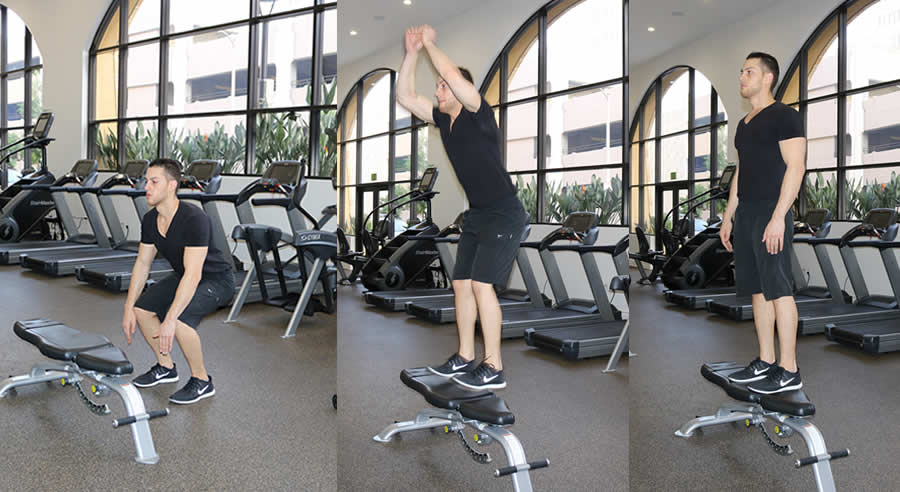
- Single-Leg Bench Jumps – Similar to box jumps, but performed one leg at a time to improve balance and single-leg power.
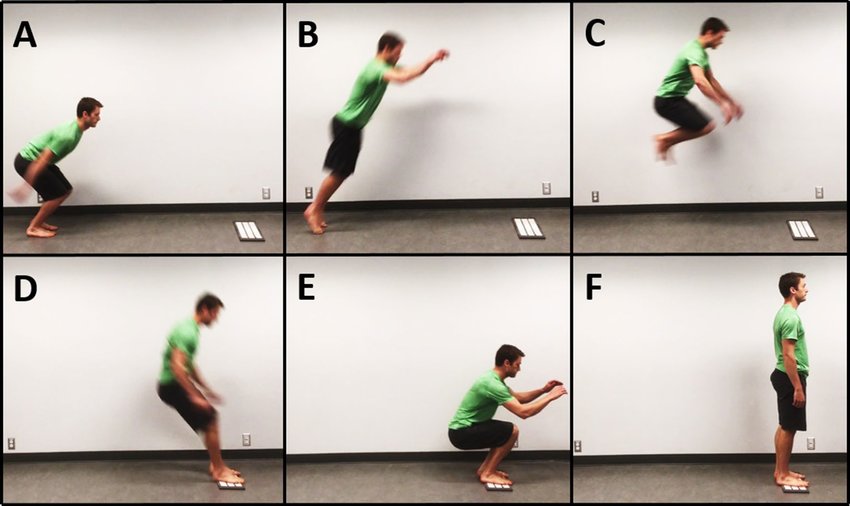
- Standing Broad Jumps – Jump forward as far as possible, using both legs to develop explosive leg power.
Flexibility and Mobility Exercises
Flexibility plays a significant role in achieving an optimal vertical jump. Tight muscles can limit movement and reduce jump efficiency. Incorporate dynamic stretching and mobility work such as:
Hip Flexor Stretches
Hamstring and Calf Stretches
Dynamic Lunges
Foam Rolling
Conclusion
Improving your vertical jump is possible with the right training approach. By combining strength training, plyometrics, and mobility work, you can increase your explosive power and jump higher. With consistency and dedication, you’ll be able to add valuable centimeters to your vertical leap—helping you perform better in basketball, soccer, volleyball, or any other sport that requires jumping ability. Start training today and reach new heights!
Frequently Asked Questions
Yes. Genetics play a role, but regular training that combines strength exercises, plyometrics and mobility work can significantly improve your jumping height with minimal equipment.
Squats, Bulgarian split squats, deadlifts and step-ups on a bench build leg strength, while depth jumps, bench jumps and standing broad jumps develop explosive power.
Yes. Using your arms for momentum adds extra propulsion, so a jump with an arm swing is noticeably higher than a jump with your hands on your hips.
Yes. Because you work against gravity, reducing excess body fat can improve your jump, but losing muscle is counterproductive because muscle provides the power for jumping.
Several of the most effective exercises in this guide – step-ups on a bench, Bulgarian split squats and bench jumps – need a sturdy bench, which makes it the centre of your jump training at home. A compact, stable foldable bench and a pair of dumbbells give you a complete home gym in under 4 m² for both the strength and the plyometric side of your programme.
The MightyRock foldable weight bench has 5 mm steel legs, a 2 mm steel frame and a rating of 500 kg (user plus weights), and it was independently tested to 460 kg by HomeGymVault Europe. It stands 43 cm high with a 110 × 29 cm pad, ships fully assembled and folds to 9.5 cm, so you can put it away after every session.