After a long vacation where we’ve enjoyed some rest and relaxation, it’s time to get back in shape. The good news? You don’t have to rush back to the commercial gym. Your home gym can provide everything you need for a gradual and effective return to fitness.
Many people make the mistake of jumping straight into intense training sessions after a break. This often leads to injuries or a drop in motivation due to fatigue. In this article, we’ll share practical tips to help you ease back into training and how our home gym equipment can make that process easier and more enjoyable.
Key takeaways
- Start with a simple written plan that matches your current capabilities instead of spontaneous, intense sessions.
- Keep sessions to around 30 minutes with fewer sets and about 60–70% of your pre-vacation loads.
- Train twice in the first week, then build up to three or four sessions per week as your body adapts.
- Base workouts on compound exercises – squats, dumbbell presses on the bench, pull-ups, bent-over rows – and add curls or tricep extensions at the end.
- All you need at home is a pair of dumbbells and a sturdy bench, plus fewer simple carbs and more protein in your diet.
How to Get Back in Shape at Home: Create a Workout Plan
Avoid going in without a strategy. Spontaneous workouts might sound fun, but they rarely lead to sustainable progress. Take a few minutes to write down a simple plan that matches your current capabilities. This approach helps prevent overtraining and keeps your sessions structured and safe.
If you want a ready-made structure, our twice-a-week push-pull-legs home workout program fits the first weeks after a break well.
Start with Your Home Gym
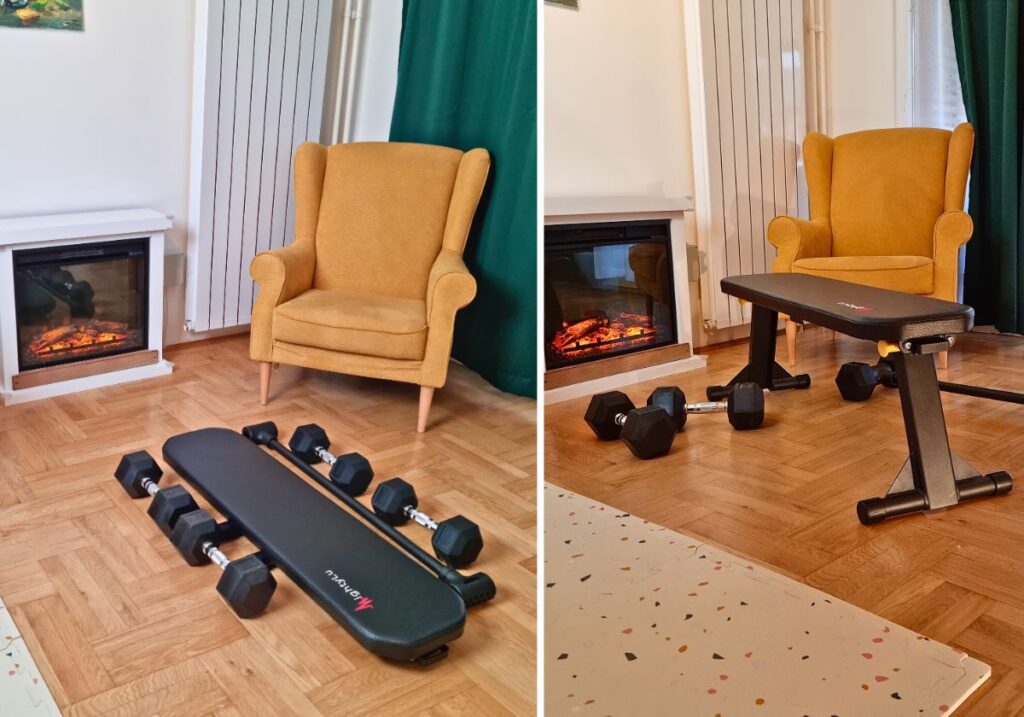
If you usually prefer training in a fitness center but struggle to find time after vacation, don’t let that discourage you. A home gym doesn’t have to be complicated or expensive. In fact, it can be as simple as a pair of dumbbells and a sturdy adjustable bench.
If you’re unsure what to look for when choosing a bench, our foldable weight bench buying guide explains the key factors like stability, folded height, and real-world usability.
With just these essentials, you can perform a variety of effective home workouts to target major muscle groups and rebuild strength. If you’re looking to upgrade your setup, you can also browse our foldable weight benches and compact home gym equipment.
How Should You Train in the First Weeks Back?
Less is More
When restarting, focus on short sessions—around 30 minutes—with fewer sets and lighter weights (about 60–70% of your pre-vacation loads). This allows your nervous system and muscles to adapt gradually, reducing the risk of injury and keeping your energy levels balanced.
Stick to the Basics
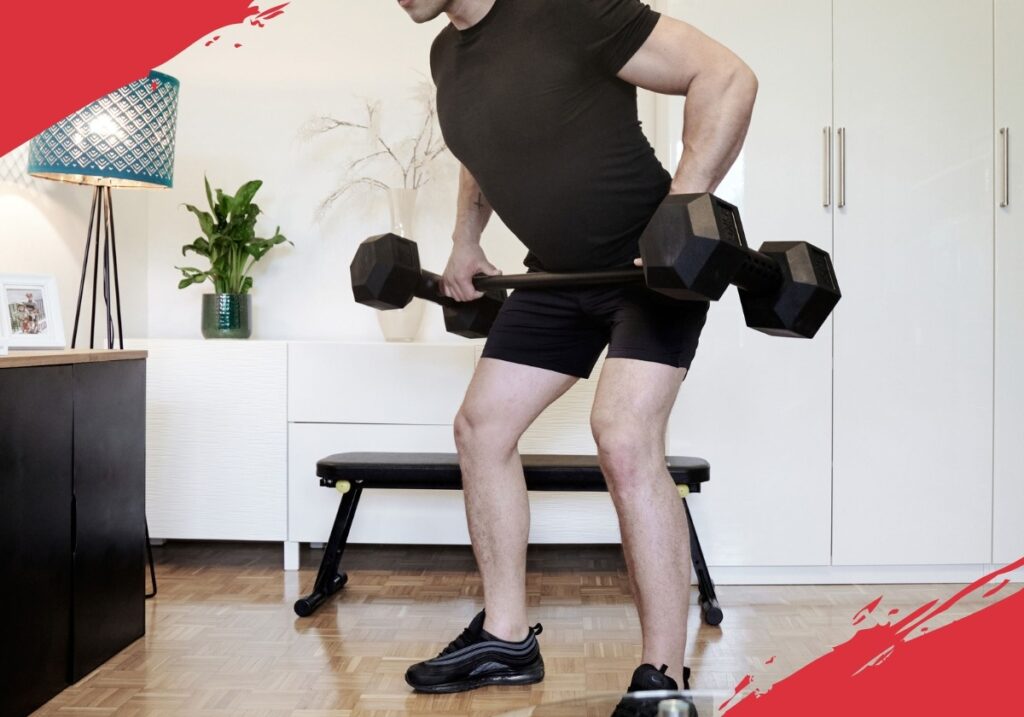
Don’t overcomplicate things. Base your home workouts on fundamental compound exercises like squats, dumbbell presses on the bench, pull-ups, and bent-over rows. These moves activate multiple muscle groups and boost your metabolism, making them perfect for reconditioning.
For technique on the bench, see our dumbbell bench press guide for home training.
You can add a few isolation exercises, such as bicep curls or tricep extensions, at the end of your session as a finishing touch.
Train with the Right Frequency
In the first week after your break, start with just two workouts. Once your body adapts, gradually increase to three or even four sessions per week. Remember: recovery is just as important as training. Adequate rest ensures you stay consistent and injury-free.
Once the lighter loads feel easy again, you can keep progressing without buying more equipment – here is how to progress with the weights you already have at home.
What Should You Eat When Getting Back in Shape?
After a summer of indulgence, it’s time to clean up your diet. Reduce simple carbs and increase complex sources such as oats, vegetables, and whole-grain pasta. Boost your protein intake to support muscle recovery and include healthy fats for sustained energy.
Final Thoughts
Getting back in shape after a holiday doesn’t require extreme measures. A structured plan, gradual progression, and a well-equipped home gym are all you need to succeed. Start small, stay consistent, and watch your energy and strength return.
Frequently Asked Questions
Write a simple plan that matches your current level, start with short sessions and lighter weights, and build up gradually. A pair of dumbbells and a sturdy bench are enough to train all major muscle groups.
Start with about 60–70% of the loads you used before the break, with fewer sets. This lets your nervous system and muscles adapt gradually.
Do two workouts in the first week, then increase to three or even four sessions per week once your body adapts. Rest days are part of the plan.
Around 30 minutes is a good length for the first weeks. Short sessions keep your energy levels balanced and reduce the risk of injury.
Compound exercises such as squats, dumbbell presses on the bench, pull-ups and bent-over rows work several muscle groups at once. Finish with a few isolation exercises like bicep curls or tricep extensions.
The basics in this plan – dumbbell presses on the bench, bent-over rows supported on the bench, squats and tricep extensions – need only two things: a pair of dumbbells and a stable bench. A compact, stable foldable bench turns a corner of your living room into a complete home gym in under 4 m², and being able to put it away after each 30-minute session makes it easier to keep the habit.
If you want the bench off the floor between workouts, the MightyRock foldable bench with wall bracket set stores it vertically on your wall. The bench itself is a patented design that folds to 9.5 cm, is rated for 500 kg (user plus weights) and was independently tested to 460 kg by HomeGymVault Europe. It stands on 5 mm steel legs with a 2 mm steel frame, gives you a 110 × 29 cm pad at 43 cm high and ships fully assembled.