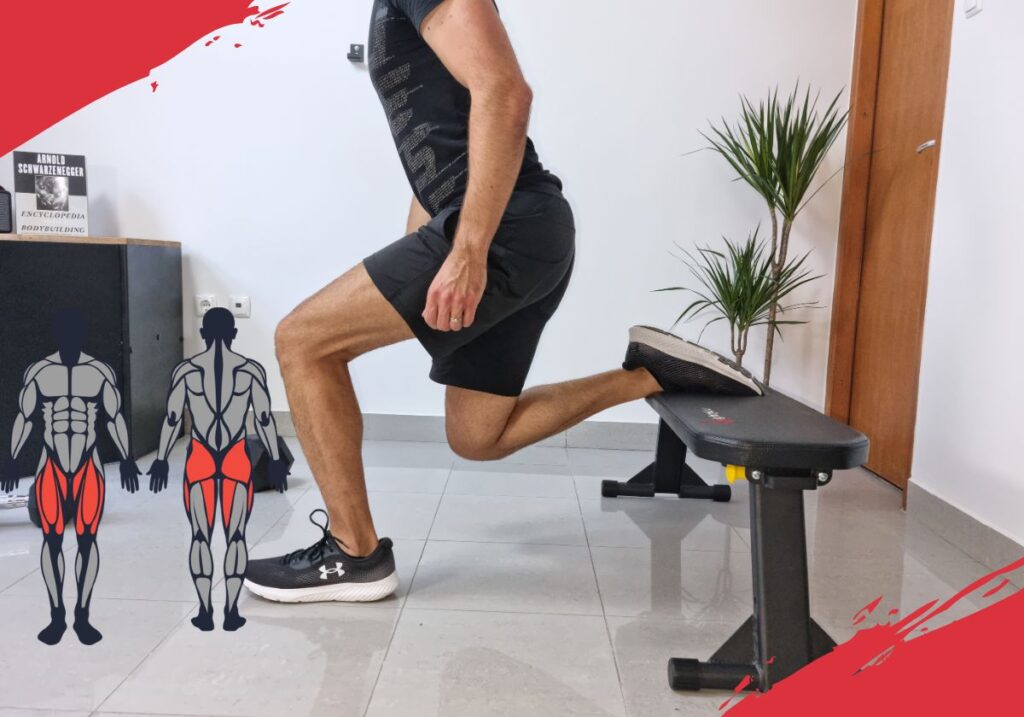
Strong legs and a solid core are fundamental pillars of every exercise enthusiast’s health and stability. The Bulgarian split squat is one of the most effective exercises for building the quadriceps and glute muscles—essential for powerful, athletic legs. Using a weight bench at home is ideal for performing this movement, offering stability and the perfect height for balancing your body as you train.
Key takeaways
- For quads: place your front foot closer to the bench, let the front knee travel forward and keep your torso upright.
- For glutes: step your front foot further away so your shin stays vertical, lean your torso slightly forward and push through your front heel.
- Bench height: roughly knee height or slightly lower – about 40–50 cm for most people. Benches over 45 cm can be too tall for shorter lifters; many find around 43 cm comfortable.
- Rest only the toes of your rear foot on the bench, lower until your front thigh is parallel to the floor and keep your hips level.
- For extra quad load, raise your front heel on a weight plate or wooden block, and alternate quad and glute emphasis between workouts.
Why a Weight Bench Is Essential for Bulgarian Split Squats
You can use a sofa or chair to perform Bulgarian split squats, but a dedicated weight bench provides optimal support. It offers the right height and firm padding that won’t compress under pressure. This means your rear foot—placed on the bench—will have a stable surface, which is crucial for maintaining balance and form throughout the exercise.
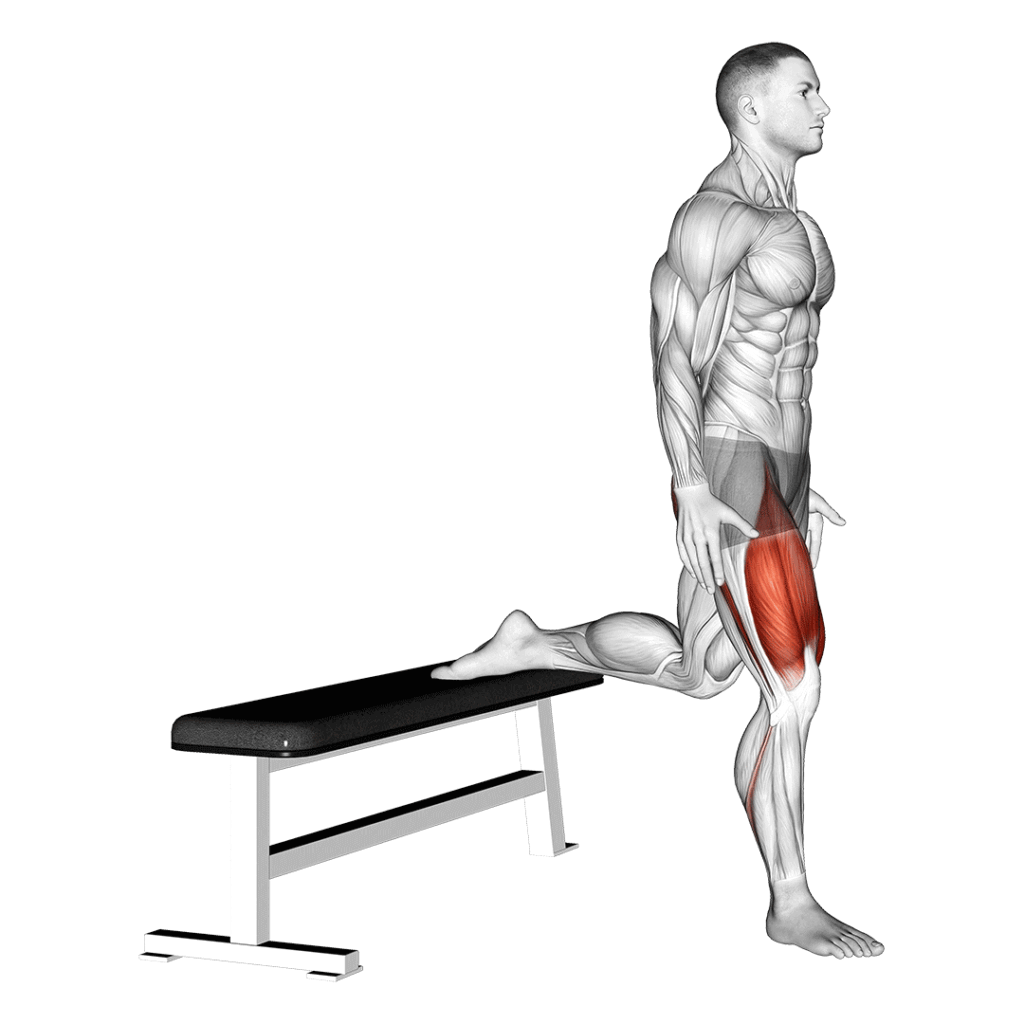
Bulgarian Split Squat for Glutes vs Quads: Foot Placement and Torso Lean
Foot Position Affects Muscle Activation: Quadriceps vs Glutes
To emphasize either your quadriceps or glutes during a Bulgarian split squat, pay attention to the position of your front foot relative to the bench. Placing the foot closer will shift more of the load to your quads, while stepping it further away recruits more glute engagement. Below, you’ll find detailed techniques for each muscle focus.
Quad-focused: front foot closer to the bench, knee travels forward over the toes, torso upright.
Glute-focused: front foot further from the bench, shin vertical, knee over or slightly behind the toes, slight forward lean of the torso.
Technique for Quadriceps Emphasis
Position your weight bench on a stable, non-slippery surface like hardwood or tile.
Sit on the bench using only about half its width.
Extend your working leg out, placing the heel on the floor.
Bring that heel about a quarter distance away from the bench—so when you squat, the top of your foot aligns roughly with your knee. This distance may vary with your anatomy, so feel free to experiment.
Place your rear foot (toes only) on the bench.
Keep your torso upright and braced.
Bend your front knee until your thigh is parallel to the floor.
Push through your front foot to return to standing.
Repeat for your desired reps.
Checklist for Quad Activation:
Your front knee should travel forward in flexion—this unloads the glutes and loads the quadriceps more.
Keep your hips level; they shouldn’t droop on either side. Engaging your core helps maintain stability.
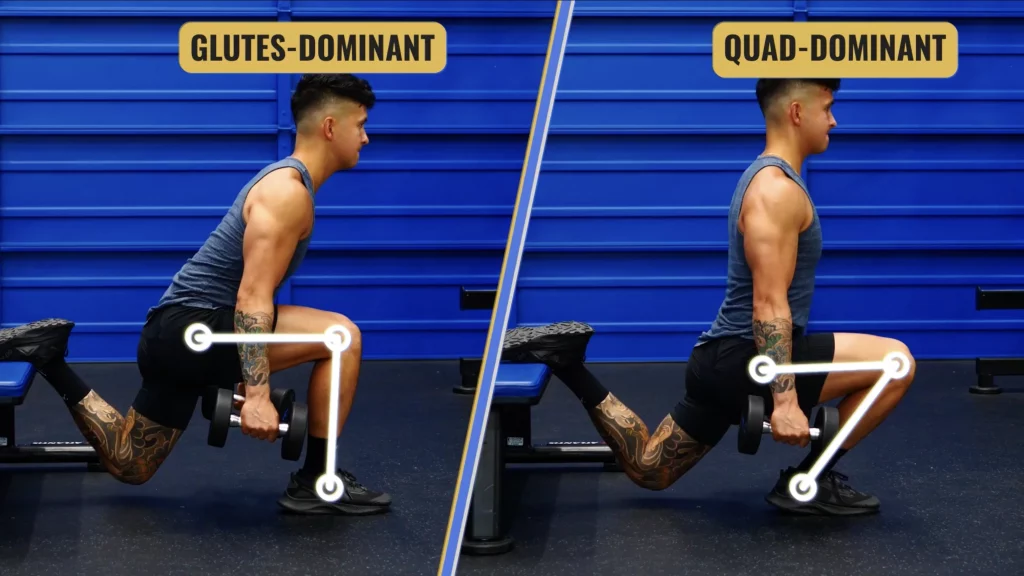
Technique for Glute Emphasis
Again, place your weight bench on a stable, non-slip surface.
Sit on the edge, using half the bench width.
Extend your acting leg so the heel rests on the floor; here, your knee should stay directly over—or slightly behind—your toes, avoiding forward drift.
Step out so your torso is upright with a slight forward lean.
Lower until your front thigh is parallel to the floor.
Push through your front heel to rise back up.
Repeat for desired reps.
Checklist for Glute Activation:
Keep your front foot further away from the bench—your shin remains vertical while your hip dips more deeply.
Maintain level hips and braced core to ensure stability and avoid twisting.
To build on glute-focused split squats, our glutes and hamstrings workout with a dumbbell to barbell converter adds hip-dominant exercises you can do at home.
How to Add Extra Load to Your Quadriceps
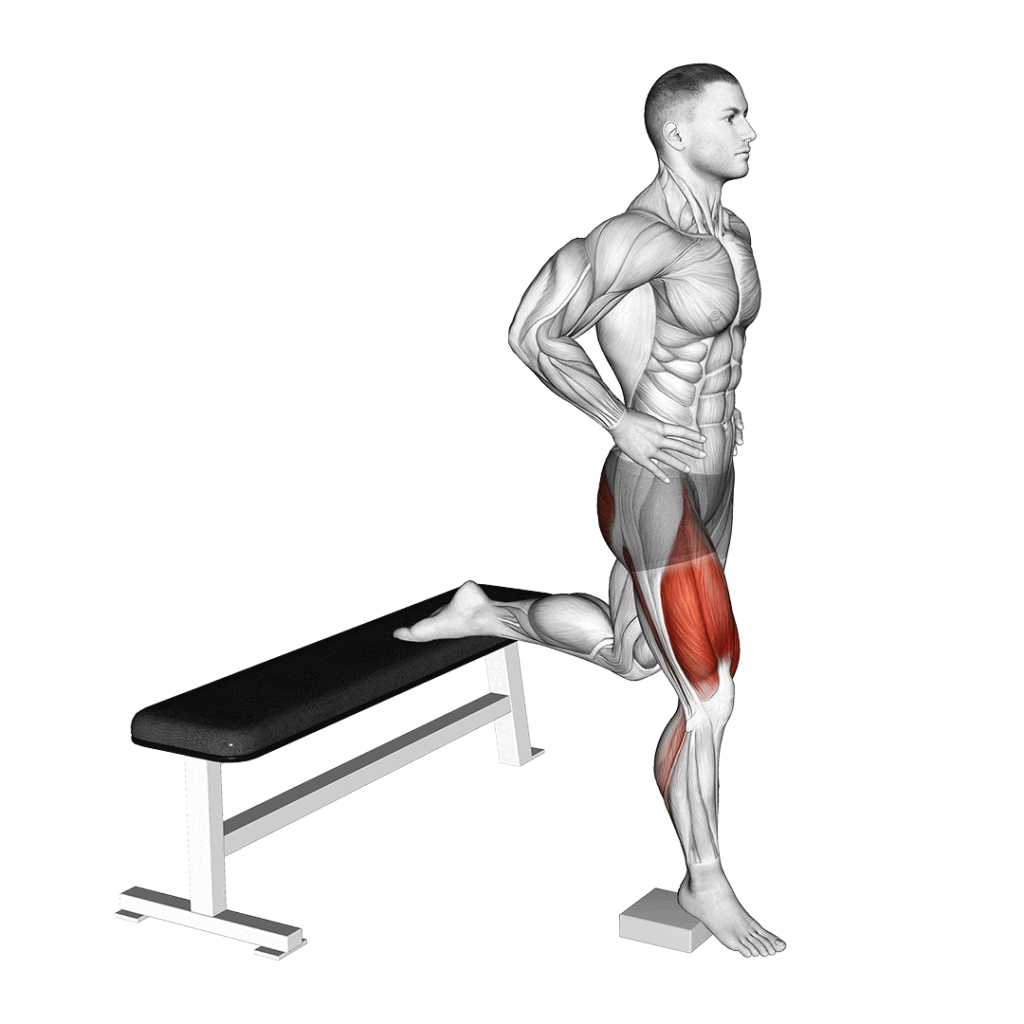
If you want to further isolate your quads, try placing a small elevation (like a weight plate or wooden block) under the front foot’s heel. This slight incline forces even more quad activation during the descent and ascent of the split squat. It’s a simple yet effective variation to ramp up intensity.
The Importance of Unilateral Training
Working one leg at a time, as with Bulgarian split squats, addresses side-to-side imbalances and increases strength in each leg independently. It also improves core stability, balance, and coordination—key benefits that carry over to athletic and daily functions. For a complete lower-body routine around this exercise, see our guide to building strong leg muscles at home with minimal equipment.
Finding the Right Bench Height for a Bulgarian Split Squat
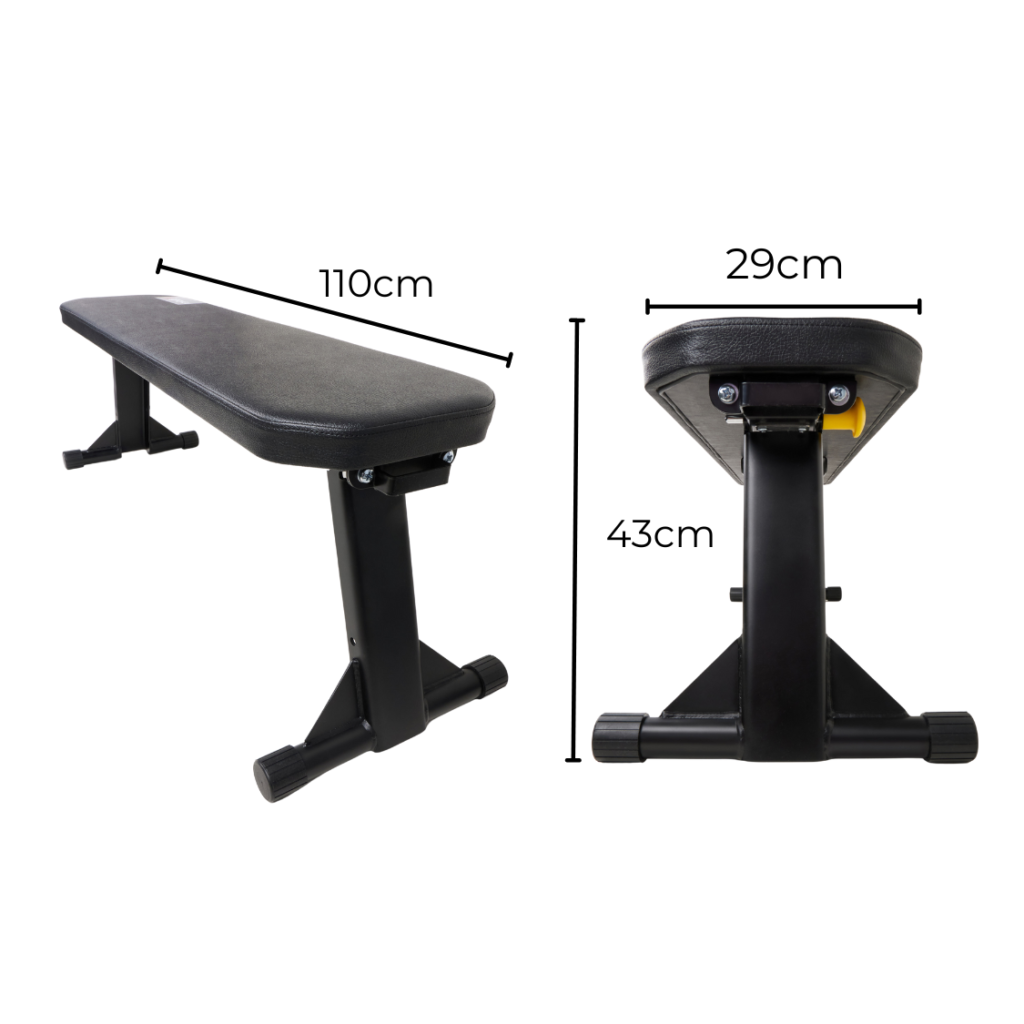
Bench height can be a limiting factor if you’re too tall or short. Standard gym benches often measure over 45 cm in height, which might be too tall for some, making quad engagement harder and technique inconsistent. As a rule of thumb, the bench should be around knee height or slightly lower – for most people roughly 40–50 cm. If you want a structured overview of what to look for when choosing a bench, our foldable weight bench buying guide explains key criteria such as stability, height, folded size, and real-world usability. Many people find that a compact, stable bench around 43 cm high makes Bulgarian split squats more comfortable and consistent. If you’re looking for a stable, home-friendly bench around 43 cm in height, you can browse our MightyRock foldable weight bench in the shop.
Practical Tips & Common Mistakes
Warming Up: Always warm up with dynamic leg stretches or light cardio to activate your muscles and prepare your joints.
Use Your Breath: Inhale as you descend, exhale as you push back up.
Watch Your Posture: Keep your back neutral, chest up, and shoulders relaxed.
Stay Controlled: Avoid dropping too quickly—control the descent to protect your joints.
Feel the Mind–Muscle Connection: Actively engage your quads when doing the quad-focused version, and target your glutes during the glute-focused version.
Mix It Up: Alternate between quad and glute emphasis each workout to develop balanced strength.
Final Thoughts
Using a weight bench at home makes Bulgarian split squats safe, effective, and convenient. Depending on your focus—quadriceps or glutes—you can adjust foot placement and body alignment for targeted muscle activation. For additional quad emphasis, a heel lift provides an extra challenge, while regular unilateral training builds balanced lower-body strength and stability.
Frequently Asked Questions
They train both, and your foot placement decides the emphasis. A front foot closer to the bench with the knee travelling forward loads the quads more, while a front foot further away with a vertical shin and a slight forward lean recruits more glutes.
Step your front foot further from the bench so your shin stays vertical, keep your knee over or slightly behind your toes, lean your torso slightly forward and push through your front heel.
Around knee height or slightly lower, which is roughly 40–50 cm for most people. Standard gym benches over 45 cm can be too tall for some lifters, and many find a bench around 43 cm high more comfortable.
Yes, you can use a sofa or chair, but a dedicated weight bench gives you the right height and firm padding that won’t compress, so your rear foot has a stable surface.
Place your front foot closer to the bench, let your knee travel forward and keep your torso upright. For even more quad activation, raise your front heel on a weight plate or wooden block.
Quad- and glute-focused Bulgarian split squats, heel-elevated variations and other single-leg work all rely on a bench at the right height that does not tip or slide when you push off. With a stable foldable bench and a pair of dumbbells you can train your legs properly at home – a complete home gym in under 4 m².
The MightyRock foldable weight bench is 43 cm high, has 5 mm steel legs, a 2 mm steel frame and a 110 × 29 cm pad, and is rated for 500 kg (user plus weights), independently tested to 460 kg by HomeGymVault Europe. Its patented design ships fully assembled and folds to 9.5 cm after your workout.