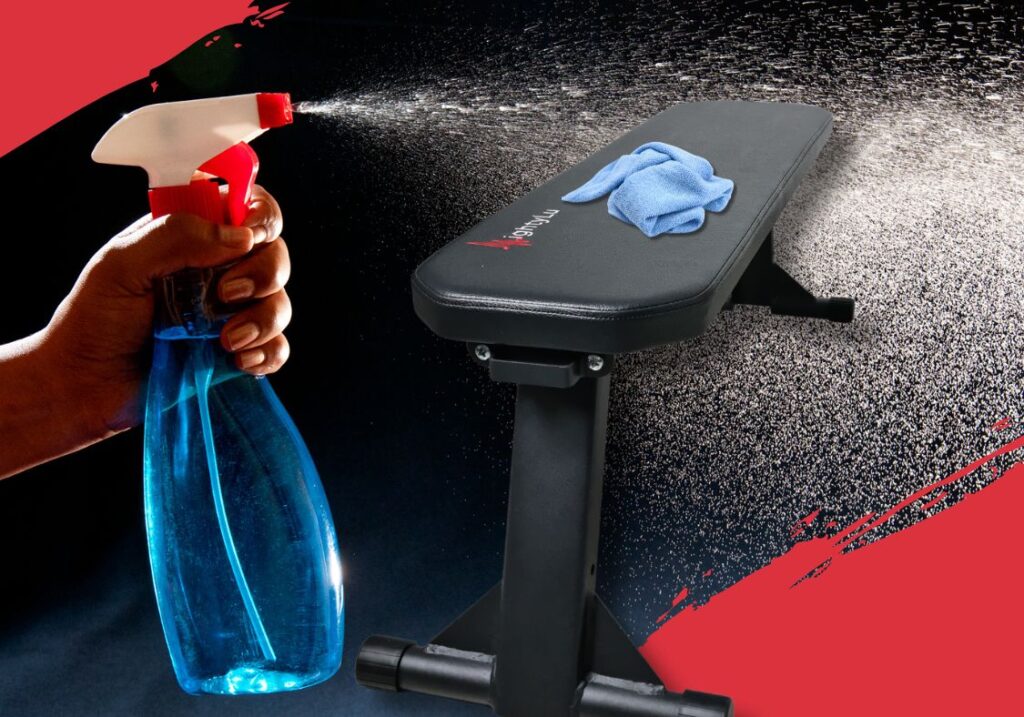
Maintaining your foldable weight bench is crucial for ensuring safety, longevity, and optimal performance in your home gym. Regular upkeep not only preserves the equipment’s condition but also enhances your workout experience. Here’s a comprehensive guide to keeping your foldable weight bench in top shape, including how to clean a weight bench properly. If you’re still comparing options, our foldable weight bench buying guide helps you understand what really matters — stability, dimensions, storage, and how a bench performs in real workouts.
Key takeaways
- After every workout, wipe the vinyl pad with a damp microfiber cloth to remove sweat.
- Once a week, deep clean the pad with a mild soap solution, rinse with a clean damp cloth and dry thoroughly.
- Clean the rubber feet with mild soap (remove the caps if possible), rinse and dry.
- Wipe the powder-coated frame and pins with a damp cloth and dry immediately; use a non-aggressive glass cleaner on chromed parts and a stainless steel cleaner on stainless steel.
- Never use alcohol, bleach, abrasive pads, hard scrubbing or soaking – they damage the upholstery and the metal finishes.
How to Clean a Weight Bench – Step by Step
Work from the parts you touch most to the parts you touch least: first the pad, then the rubber feet, then the metal frame and pins.
Step 1: Clean the Foldable Weight Bench Upholstery Regularly
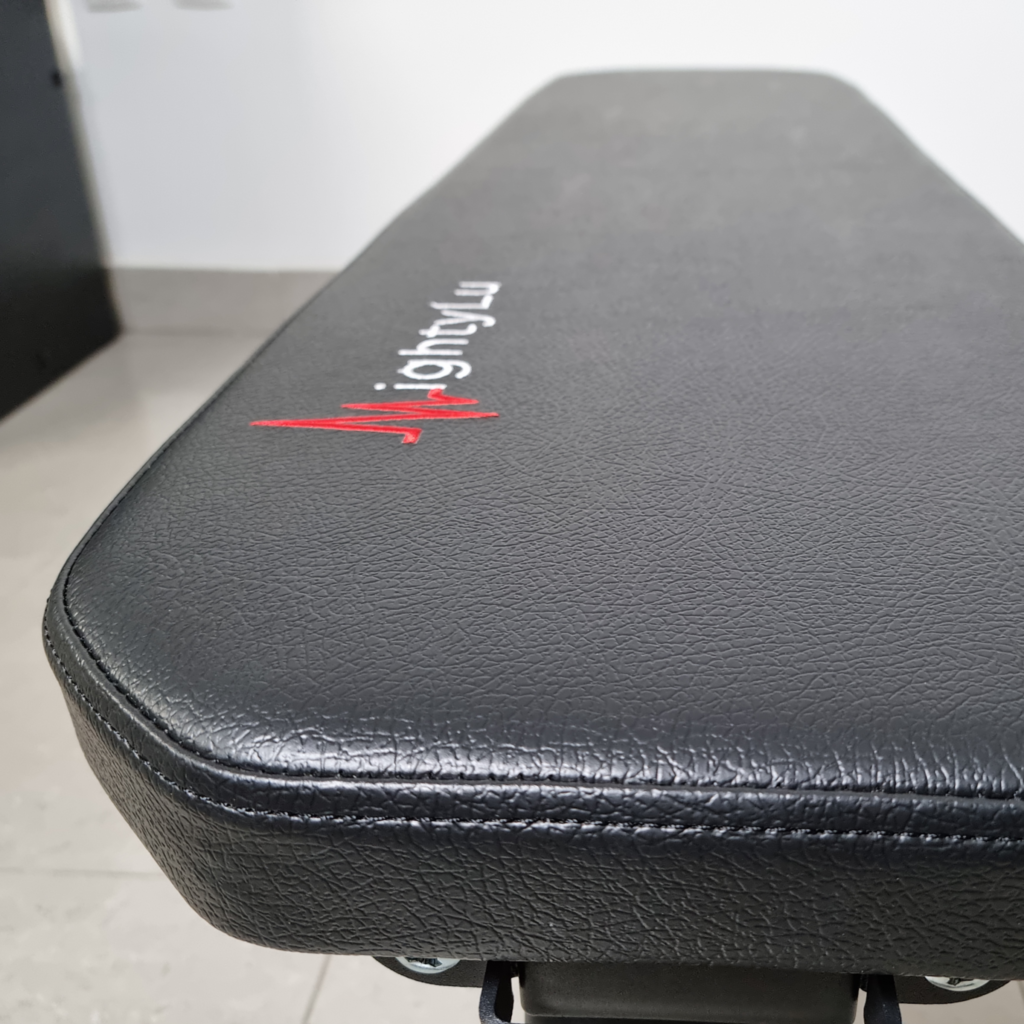
The bench’s upholstery, often made of vinyl or synthetic leather, can accumulate sweat and grime, leading to deterioration over time. To maintain it:
After each workout: Wipe down the surface with a damp microfiber cloth to remove sweat.
Weekly deep clean: Use a mild soap solution (avoid harsh chemicals like alcohol or bleach) to clean the upholstery. Rinse with a clean, damp cloth and dry thoroughly.
Regular cleaning prevents bacteria buildup and extends the life of the material.
Step 2: Maintaining Rubber Elements on Your Foldable Weight Bench
Weight benches often have rubber feet to protect floors:
-
Remove caps if possible, clean with mild soap, rinse, and dry.
-
For fixed rubber parts, clean directly on the bench using the same method.
Use these steps for any other rubber or padded parts.
Step 3: Caring for Metal Parts of Your Weight Bench
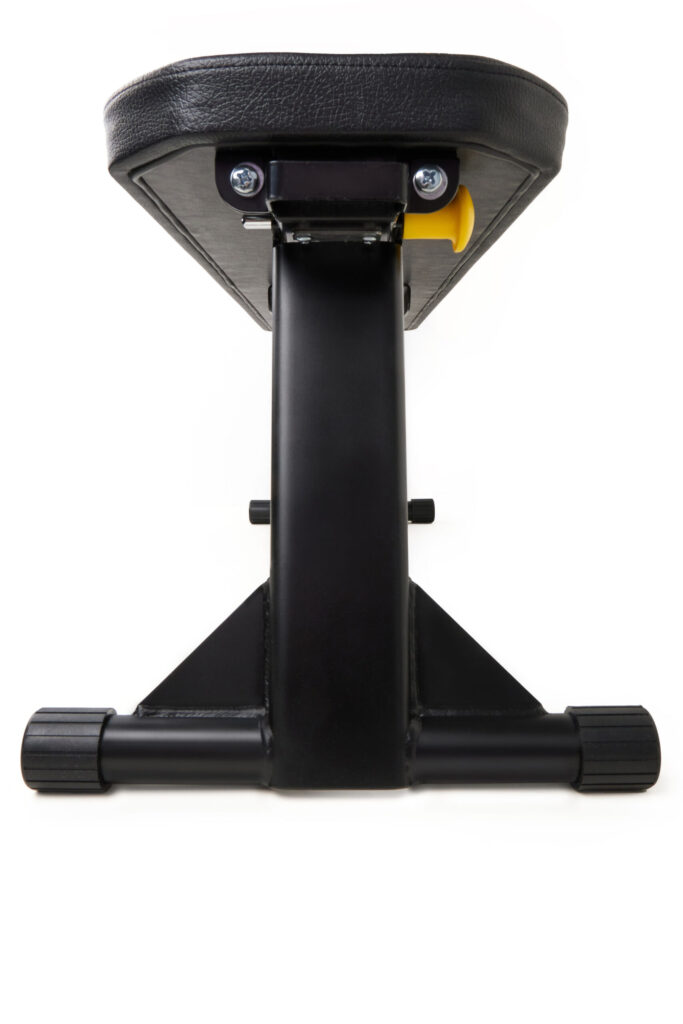
The frame and legs carry the load in every workout, so keep them clean and dry. To learn more about why they matter, read what makes a foldable weight bench stable.
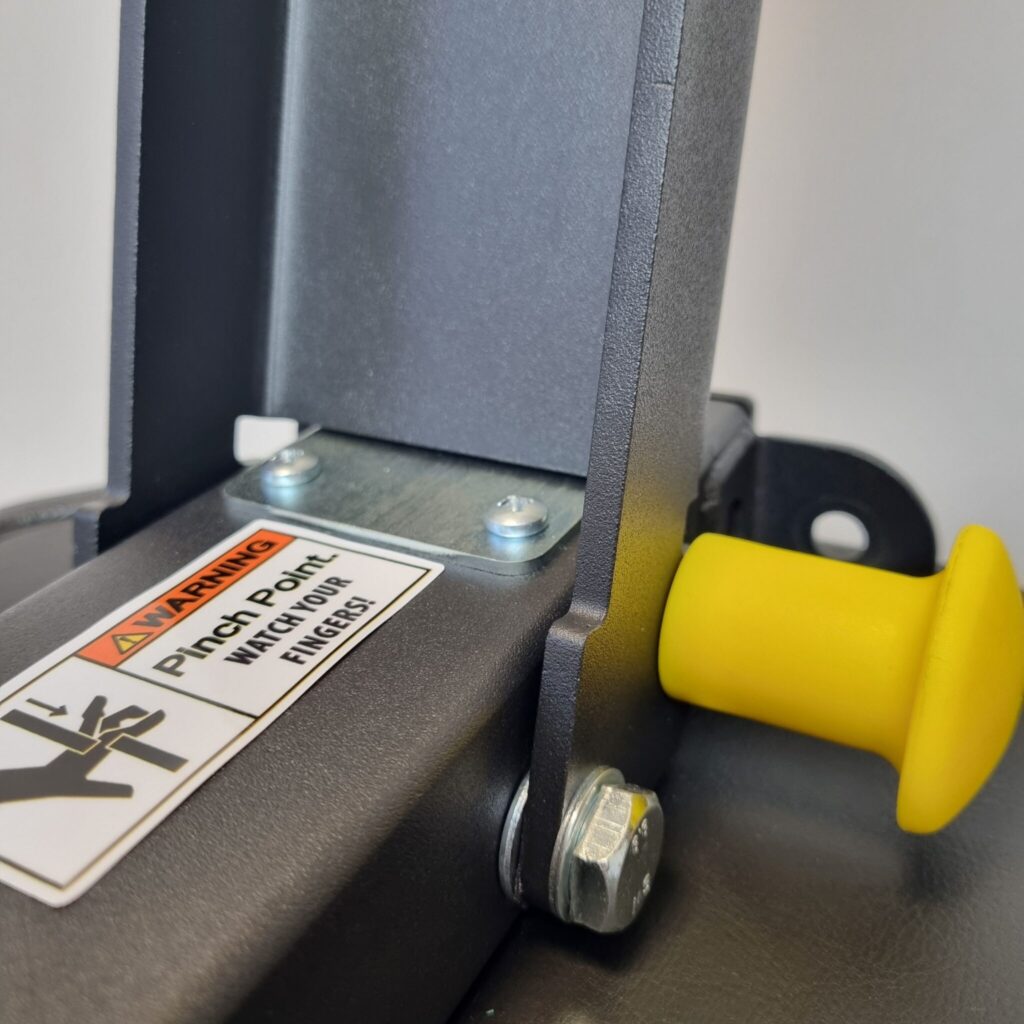
Chromed Steel
Found on adjustable or accessory parts, chromed steel is vulnerable to sweat-induced corrosion. Clean with a non-aggressive glass cleaner to maintain shine and prevent rust.
Stainless Steel
Stainless steel is corrosion-resistant but not maintenance-free. Wipe it down with a damp cloth, and if needed, use a stainless steel cleaner. Avoid abrasive pads.
Galvanized Steel
Less common but occasionally used, galvanized steel is durable. Use a mild soap solution and soft cloth. Do not scrub hard to avoid damaging the zinc layer.
Powder-Coated Steel
Most indoor benches use powder-coated steel. Dust regularly and wipe with a damp cloth. Always dry immediately. Avoid soaking to prevent paint chipping.
Safety Pins and Adjustment Holes
Pins are handled with sweaty hands in almost every session. Wipe them and the holes they sit in with a damp cloth, dry them, and clean them with the method that matches their finish.
What Should You Not Use to Clean a Weight Bench?
- Vinyl or synthetic leather pad: no harsh chemicals such as alcohol or bleach.
- Stainless steel: no abrasive pads.
- Galvanized steel: no hard scrubbing, which can damage the zinc layer.
- Powder-coated steel: no soaking, and never leave it wet.
Final Thoughts
Following these steps will keep your Foldable weight bench in top condition—both functionally and aesthetically. You’ll get more from your workouts and maintain resale value over time.
Frequently Asked Questions
Wipe the pad with a damp microfiber cloth after every session to remove sweat. Once a week, clean it with a mild soap solution, rinse with a clean damp cloth and dry thoroughly.
Avoid harsh chemicals such as alcohol or bleach, which damage vinyl and synthetic leather over time. A mild soap solution and a microfiber cloth are all you need.
Wipe it down after each workout and give the upholstery a deeper clean with mild soap once a week. Regular cleaning prevents bacteria buildup and extends the life of the material.
Most indoor benches are powder-coated: dust regularly, wipe with a damp cloth and dry immediately without soaking. Use a non-aggressive glass cleaner on chromed parts and avoid abrasive pads on stainless steel.
Remove the caps if possible, clean them with mild soap, rinse and dry. Fixed rubber parts can be cleaned directly on the bench in the same way.
A clean, well-kept bench matters most when it is the centre of your home training – the piece you lie on for dumbbell presses, sit on for shoulder presses and step onto for step-ups and split squats. A compact, stable foldable bench that you fold away after cleaning stays protected between sessions, and together with your dumbbells it makes a complete home gym in under 4 m².
The MightyRock foldable weight bench is built for this kind of everyday use: a 110 × 29 cm pad, 5 mm steel legs and a 2 mm steel frame, a rating of 500 kg (user plus weights) and an independent load test to 460 kg by HomeGymVault Europe. It ships fully assembled and folds to 9.5 cm, so it is easy to wipe down, dry and store.